Technique · 22 April 2026
Snapper hole-hunting: the technique that fills Thai dinner tables
How to spear snapper on Thai reefs. Hole-reading, approach angles, and the gun setup that works on the 1-3 kg class that makes most dinners.
Snapper hole-hunting: the technique that fills Thai dinner tables
If you ask ten Thai spearos what their most-shot fish is, nine will say snapper. The red, the mangrove, the checkered — doesn’t matter which — it’s the reliable reef species that turns a morning session into dinner. And the technique, once learned, works for the rest of your hunting life.
This is the detailed guide to hole-hunting snapper in Thai water.
The short version
- Depth range: 3-12 m. Most snapper are taken at 5-8 m.
- Where: overhangs, cut-ins, boulder piles, reef ledges. Gulf or Andaman.
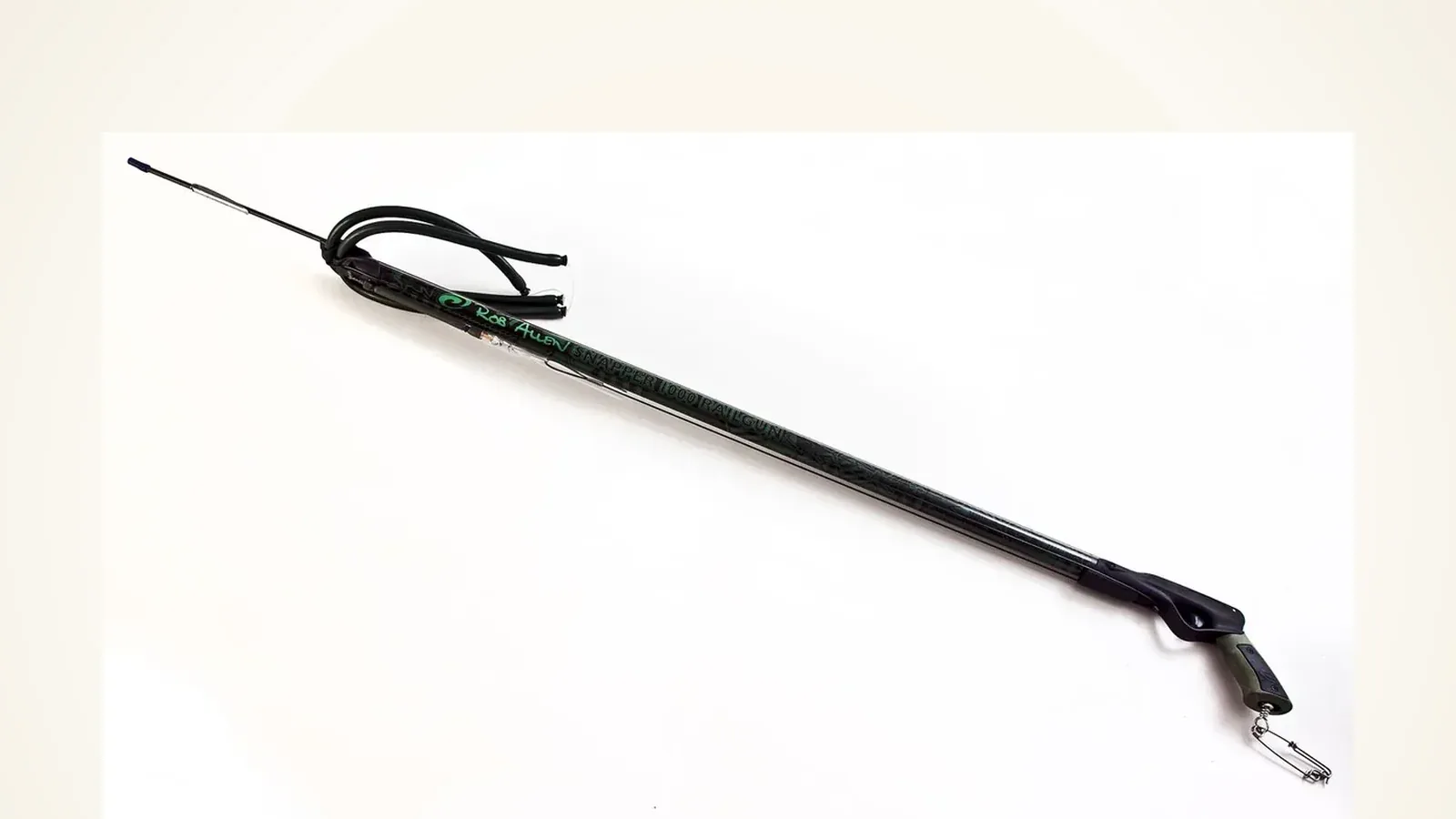
- Gun: 65-75 cm Snapper Railgun, single 14 mm rubber, 6.5 mm shaft. Light, fast, close.
- Key skill: reading a hole from outside before committing.
- First fish target: mangrove snapper on the Gulf coast is the easiest confidence-builder in Thai waters.
What makes a snapper a hole-hunter’s fish
Snapper do three things that define the technique:
- They hold in structure. A snapper lives in its hole — a specific overhang or crevice — and returns to it after feeding. If you find the hole, you find the fish.
- They face outward. Snapper point toward the hole entrance, watching for food and threats. This means they are pointing at you before you see them.
- They back deeper, not flee. When spooked, snapper retreat further into the hole, not sideways. Patience beats speed.
The five phases of a snapper hunt
Phase 1 — Scan from outside
Approach the reef from above, not at level. Drop 2-3 m above the target overhang and look down into it. Your field of view is wider from above and the fish cannot see you against the surface light.
Look for:
- Eyes: snapper eyes reflect light at a characteristic angle. A pair of dim circles at the back of a hole is often a fish.
- Colour inconsistency: snapper reds and coppers don’t match the grey of the rock. Once your eye is trained, you spot them.
- Silhouette breaks: a lateral fin edge or a tail silhouette against the hole’s inner wall.
Phase 2 — Quiet descent
Once you’ve identified a hole, descend slowly. Kick once from the surface, then glide. Do not kick again at reef level — bubbles and wake give you away.
Drop to the level of the hole, not below it. You want to arrive exactly parallel to the entrance, so your shot line is flat into the hole.
Phase 3 — The 45° approach
Approach the hole from one side, at roughly 45° to the entrance. Never head-on. Head-on approach pushes a bow wave of water that the fish’s lateral line feels at 3-5 m range. Side approach at 45° minimises pressure-wave detection.
Phase 4 — The freeze
Stop 2-3 m from the hole. Freeze. Let the current push you slowly toward the entrance. Gun raised, safety off. This is where most new spearos fail — they keep kicking closer and spook the fish.
Phase 5 — The shot
Shoot when you are at 1.5-2 m range from the fish. Aim behind the gill plate. Close-range precision beats long-range optimism every time.
Reading specific hole types
Not all holes are the same.
The overhang
A classic flat-bottomed overhang, usually 1-2 m deep. Snapper sit in the shadow at the back, often two or three fish together. Standard 45° approach, close-range shot.
The crevice
A vertical slot in the reef. Snapper hold mid-crevice, one fish per slot usually. Shoot from the surface of the slot, angled down.
The boulder stack
Boulders stacked with gaps between them. Fish can be in any gap. Scan each gap systematically — don’t rush.
The wreck hull
Wrecked or artificial reef structures — hulls, anchor boxes, mooring blocks. Snapper live inside. Approach with caution, shaft first, as a wreck has sharp edges that catch shafts.
Gun setup — why short and light
Short guns win snapper hunts. A 65-75 cm Snapper Railgun is the right tool. Here’s why:
- Maneuverable in tight overhangs. A 1 m gun gets caught on reef edges.
- Reloadable without surface delay. 10-second reload on the surface means you’re back in the water quickly.
- Single-band = less loading effort. You’ll shoot 30+ times in a productive morning. Single 14 mm doesn’t exhaust you.
- Right penetration for 1-3 kg fish. Double-banded overkill passes through the fish and wrecks the shaft on the rock behind.
Our rubber-shaft calculator pairs the right rubber spec for a 65-75 cm hole-hunting setup.
For beginners, the Reef Starter Kit includes an 80 cm Snapper (close to ideal for hole hunting with a slight step up for mid-water shots) + mask, fins, belt, float, and line at 12% off. It’s the fastest path to a working kit.
Species you’ll actually shoot
Thai waters hold a dozen snapper species. The main ones:
- Mangrove snapper (Lutjanus argentimaculatus) — greyish-red, 1-3 kg typical. The workhorse Gulf species. Hole-holder.
- Russell’s snapper (Lutjanus russellii) — silver body with a single black side-spot. 0.8-2 kg. Abundant on both coasts.
- Red snapper (Lutjanus malabaricus) — vivid red, deeper-hole fish. 1-4 kg. Andaman and Gulf offshore.
- Checkered snapper (Lutjanus decussatus) — cross-hatched pattern, smaller class 0.5-1.5 kg. Reefs with coral cover.
Each has slightly different hole preferences, but the technique is identical.
Seasonal timing
Snapper fishing is consistent year-round but visibility matters. Peak months:
- December-March on the Gulf coast (Samui, Chumphon).
- November-April on the Andaman.
Skip July-September on the Andaman (monsoon) and October-November on the Gulf (stirred water from NE monsoon).
Full breakdown: Thailand spearfishing season.
Shot placement on snapper
Snapper have medium-dense skulls and a clearly visible lateral line. Best shots:
- Through the gill plate — angled forward into the skull cavity. Instant kill. Best choice.
- Behind the pectoral, through the spine — clean if you hit the spine, wounding if you miss it.
Avoid: belly shots (slow, bad eating), tail shots (fish keeps fighting into the hole).
Dispatch and care
Every snapper gets an ikijime spike to the brain the moment it’s boated. Two reasons:
- Welfare: fish death by suffocation is slow and cruel.
- Meat quality: spiked fish don’t release stress hormones into the flesh. The difference on the dinner plate is real.
Follow with iki (bleed) out the gills into the water over the side. A properly dispatched and bled snapper, cooked the same day, is worth twice what you paid for the gun.
Training + progression
If snapper hole-hunting is your first real target species (it should be for most beginners):
- Apnea Total Level 1 — the foundation.
- First 5 dives: watch fish, don’t shoot. Learn to see them in holes.
- First 5 shots: at snapper in clear, shallow holes (3-6 m).
- Build to deeper holes, darker overhangs, bigger class.
Target static apnea (breath-hold) of 1:30-2:00 for comfortable hole-hunting at 8 m depth. Use our breath-hold trainer to progress.
Common mistakes
- Approaching head-on. Spooks fish.
- Kicking at reef level. Bubbles + wake reveal you.
- Shooting at max range to “make sure”. Close and precise wins.
- Using too much gun. Double 16 mm on a 1.5 kg fish passes through and wrecks shafts.
- Not dispatching quickly. Bad meat, ethically poor.
Eating note
Thai-style preparation for snapper:
- Grilled whole with tamarind + palm sugar glaze (“pla thapthim pao”)
- Steamed with lime, chilli, garlic (“pla neung manao”)
- Three-flavour sauce, deep fried (“pla raad prik sam rod”)
A 1.5 kg snapper feeds two. The fresher it is, the better — ideally same-day cooking.
Got a reef in mind? WhatsApp me with your coast and dates — I’ll tell you straight whether it’s hole-productive and what gun to take.
Published 22 April 2026 · Diego Pauel · Technique
snappertechniquehole huntingreef
Keep reading
You might also like.
Technique
Pencil point sharpening — Rob Allen's method for Thai reef species
Every missed reef shot rolls your spear tip. Rob Allen's 2024 pencil-point sharpening method, applied to the Thai specie…

Species
Grouper hunting on Thai reefs: patience, precision, and which rock to read
Grouper spearfishing tactics for Thai reefs. Hole-hunting technique, shot placement on hard-skinned fish, and how to tel…
Technique
Frenzel equalisation for spearos: the only technique that scales past 15 metres
Step-by-step guide to the Frenzel equalisation technique for spearfishing. Why it matters, how to learn it, and the dril…