Technique · 9 April 2026
Pencil point sharpening — Rob Allen's method for Thai reef species
Every missed reef shot rolls your spear tip. Rob Allen's 2024 pencil-point sharpening method, applied to the Thai species that dull tips fastest.
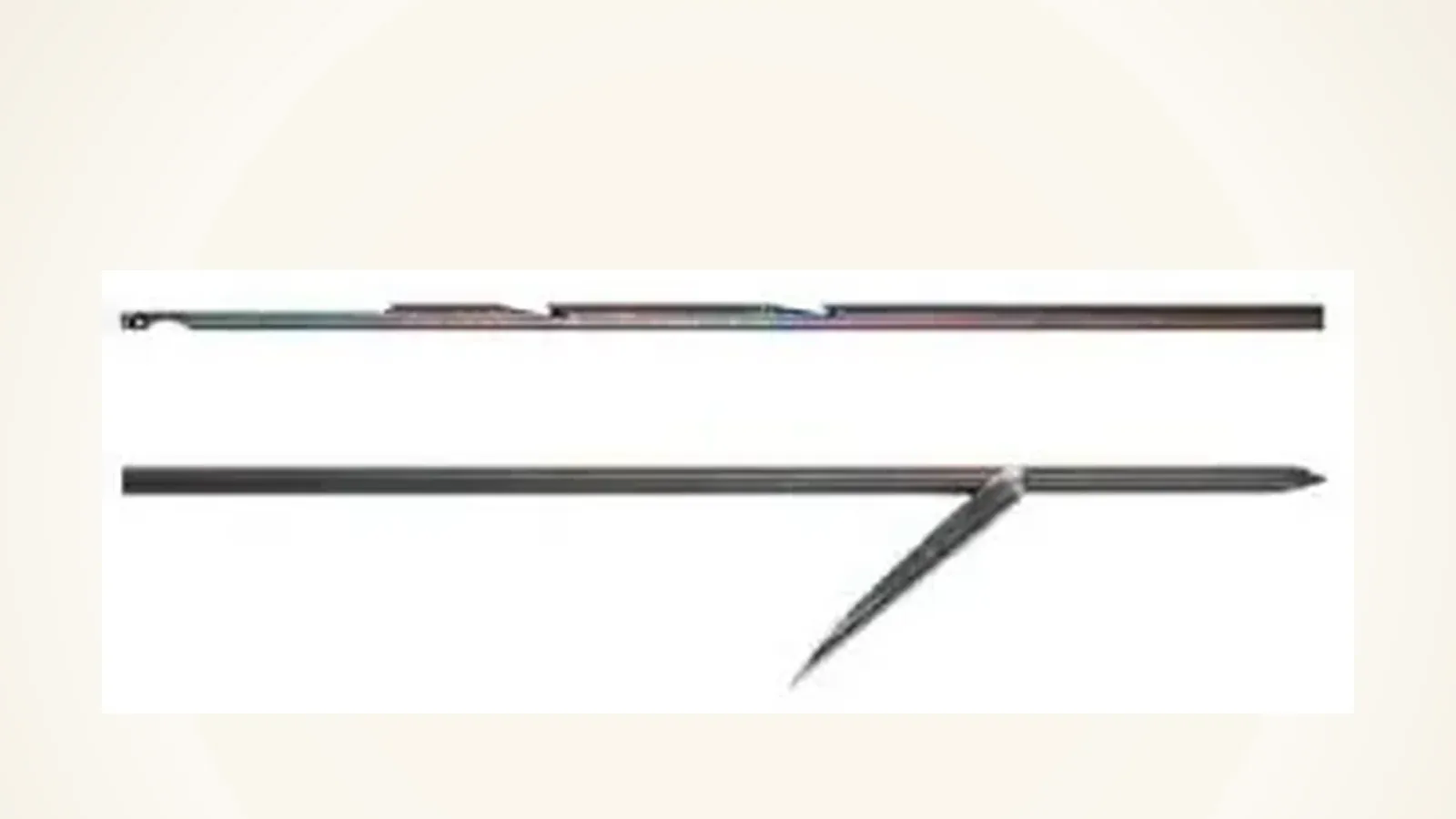
Pencil point sharpening — Rob Allen’s method for Thai reef species
Rob Allen’s rule from the accuracy diagnostic series: carry a file on the boat, check your spear tip after every missed shot. It changes the trajectory of the spear more than spearos realise.
Rob showed the pencil-point sharpening method on the channel in 2024. Here is the method, and here is why Thai reef species make it necessary more often than anywhere else.
Why tips roll in Thailand
Thai reef fishing targets dense-boned, heavy-scaled species that scrape and deflect a missed spear:
- Parrotfish — bony skulls and thick scales that can fold a pencil-point tip on a glancing shot
- Big grouper — dense jaw bones, plus holes in coral limestone where a missed shot drives the spear into rock
- Sweetlip — scales hard enough to leave files of damage on a tip
- Unicornfish / rudderfish — dense cranial bone
- Moray eels in holes when you miss the grouper you were aiming at
Add to that the fact that Gulf of Thailand reef is heavily calcium-based coral limestone — some of the hardest rock a spear can hit — and the result is: tips get beaten up fast here. A spearo doing three dives a day in Similans or Koh Tao will be filing tips between dives by day two.
Rob’s setup — what you need
From the video:
For workshop-grade sharpening (once a month):
- Angle grinder with a fine-grit disc
- G-clamp to hold the spear horizontal
- Safety glasses (Rob: “preferably use proper safety glasses” — not just reading glasses)
- Rubber O-ring around the barb to keep it out of the way
- A way to rotate the spear evenly
For between-dive boat touch-ups:
- A small flat file (the kind used for sharpening fishing hooks)
- 30 seconds
The file is the thing. Keep one in your boat bag always. Without it, you are diving a damaged spear and wondering why the shots are going off.
The pencil-point geometry
“Pencil point” means the tip is ground to a point like a sharpened pencil — a roughly 60-degree included angle coming to a single point, not a multi-facet tip like a tri-cut.
Rob: “You can go a little bit less a little bit more it’s not an exact science.” The range that works well is 55-65 degrees.
Steeper than 55° (too pointed): the point itself is fragile and rolls on the first hard contact.
Flatter than 65° (too blunt): penetration drops because the spear has to push more material aside on entry.
60° is the sweet spot — enough point to drive through fish, enough mass at the point to survive rock contact.
The workshop method
- Clamp the spear horizontally. G-clamp to a workbench. The shaft should not move.
- Keep the barb out of the way — O-ring or tape.
- Angle grinder with the disc rotating so sparks fly away from you.
- Work the disc at ~60° to the shaft, rotating the spear slowly.
- Stop before it gets hot. Rob: “Don’t let it get hot.” Overheating removes the steel’s temper and you weaken the tip for good.
If you overheat, you can see it — the metal turns straw-coloured, then blue. If that happens, you have to grind the damaged zone off entirely and start again from cleaner steel.
Rob’s footage shows a first pass that ends up slightly flat. He steepens the angle a degree or two and runs it again. Normal — fine-tuning is part of the process.
The boat touch-up method
Every missed shot that hit rock or coral, within 30 seconds of getting back on the boat:
- Check the tip by eye. Rolled metal? Bent over? Fold?
- Three to five file strokes on the affected side to remove the rolled metal and re-establish the point.
- Check the point. If it is a clean point, load it and keep diving. If it is still folded over, you are in workshop territory — swap spears for the rest of the day.
This takes 30 seconds, can be done between dives, and prevents a hidden damaged tip from throwing your next shot.
When to stop sharpening and replace
You cannot sharpen indefinitely. Each pass removes some material. Signs the spear is past usable:
- Point cannot be re-established — metal keeps folding or chipping rather than holding a point
- Shaft has visible blueing/straw colour near the tip (overheated steel, weak)
- Barb is no longer crisp — wear has affected the barb mechanism
- Roll test fails — shaft is bent (see speargun accuracy diagnostic)
At that point, swap the spear. Rob Allen plated spring-steel shafts are $20-40 depending on length — do not try to squeeze another season out of a tired shaft.
The Rob Allen factory-sharp option
If you do not want to sharpen yourself, Rob Allen sells factory-sharpened spears. These come ready to dive with a clean pencil point from the factory, not a conservative “point-ish” that most generic spears ship with.
Factory-sharpened spears cost a few dollars more. Worth it if you dive Thai reef and prefer maintenance time on band-swapping rather than sharpening.
Full range of spear shafts is in stock — most Rob Allen SKUs are available factory-sharpened.
The two-line summary
Carry a file. Sharpen at 60°. Do not let it get hot. Swap the spear when it cannot hold a point. That is every accuracy gain other spearos are writing forum posts about, condensed.
If your accuracy is off and you cannot tell if the tip is the problem, run it through the accuracy diagnostic — it asks the tip question explicitly.
Published 9 April 2026 · Diego Pauel · Technique
sharpeningspear tiprob allentechniquereef
Keep reading
You might also like.
Technique
Snapper hole-hunting: the technique that fills Thai dinner tables
How to spear snapper on Thai reefs. Hole-reading, approach angles, and the gun setup that works on the 1-3 kg class that…

Species
Grouper hunting on Thai reefs: patience, precision, and which rock to read
Grouper spearfishing tactics for Thai reefs. Hole-hunting technique, shot placement on hard-skinned fish, and how to tel…
Technique
Frenzel equalisation for spearos: the only technique that scales past 15 metres
Step-by-step guide to the Frenzel equalisation technique for spearfishing. Why it matters, how to learn it, and the dril…