Species · 22 April 2026
Grouper hunting on Thai reefs: patience, precision, and which rock to read
Grouper spearfishing tactics for Thai reefs. Hole-hunting technique, shot placement on hard-skinned fish, and how to tell a 2 kg ambush from a 10 kg one from the water column.

Grouper hunting on Thai reefs: patience, precision, and which rock to read
Grouper (ปลาเก๋า) is the reef staple for Thai spearos. Good eating, widely distributed across both coasts, and — crucially — catchable on a realistic beginner or intermediate setup. The tricky part is that groupers sit still, and most new hunters walk right past fish they could have shot. This is the hole-hunter’s guide.
The short version
- Where: rocky overhangs, reef ledges, wreck hulls. 5-15 m depth is the sweet spot. Both Gulf and Andaman hold good populations — Gulf has better access on legal coast.
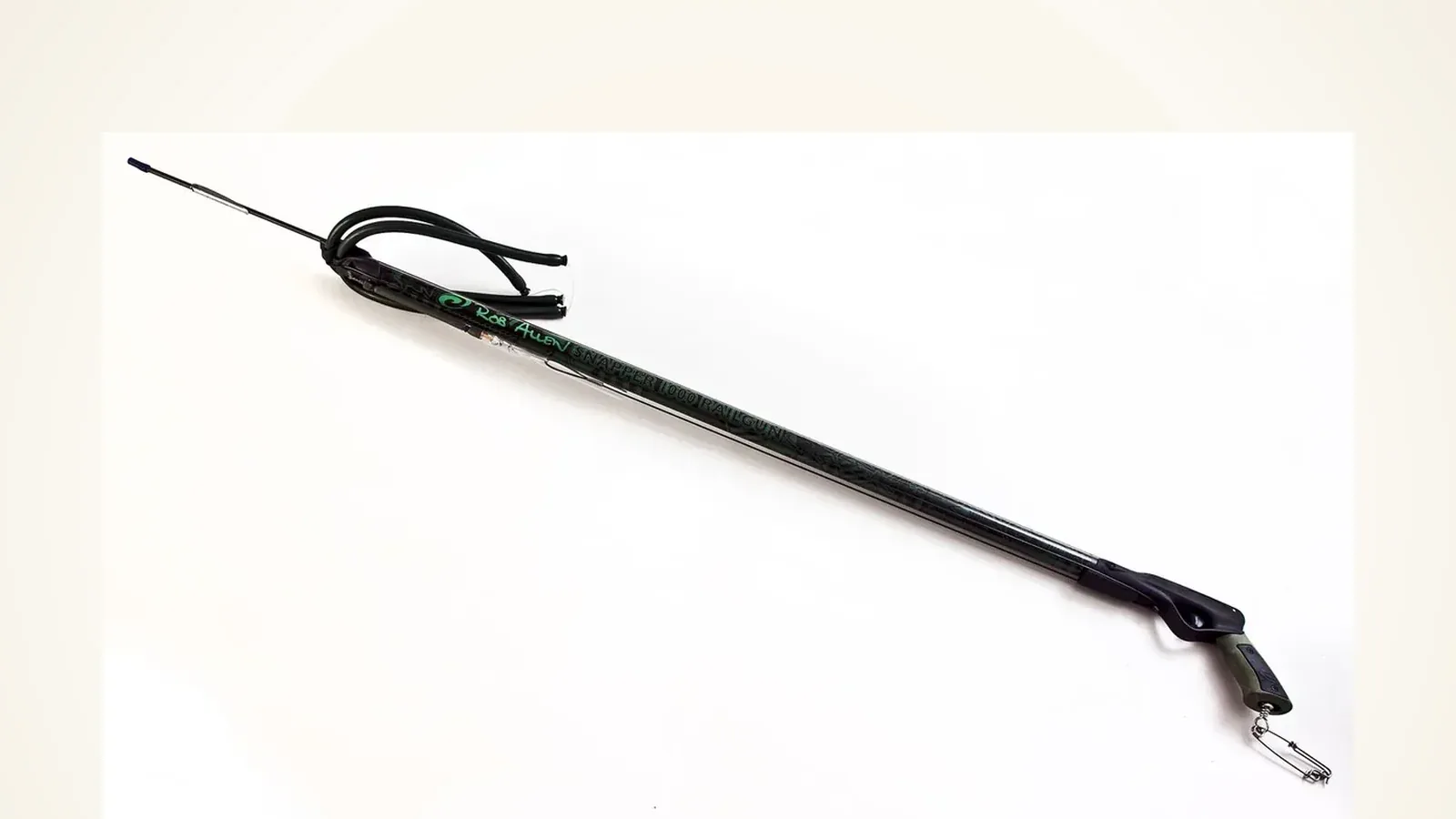
- Gun: 75-90 cm Snapper Railgun, single 14 mm rubber, 6.5-7 mm shaft. No need for bluewater power.
- Shot placement: through the gill plate or behind the pectoral. Avoid head shots — the skull is dense bone.
- Technique: stalk-and-ambush, not chase. Groupers do not run far — they back deeper into the hole.
- Size class in Thailand: 1-4 kg is typical, 5-10 kg is a good day, 15 kg+ is a trophy.
Reading the reef for grouper
Not all reefs hold grouper. The hallmarks of a grouper reef:
- Layered rock with overhangs. Flat sandy bottoms hold none. You want vertical relief — ledges, boulders, reef cuts, wreck debris.
- Current, but not rip. Light current delivers baitfish to the overhang mouths. Dead-still water means no feeding activity.
- Mixed species. If you see cleaner wrasse, butterflyfish, and baitfish clouds on an overhang, grouper are probably in it.
The two kinds of grouper hunt
1. Hole-hunting (95% of Thai grouper)
This is the main technique. Drop to the level of the overhang, approach slowly from the side (not head-on), and scan each hole.
What to look for: a pair of eyes, the triangular silhouette of the dorsal, or the white stripe along the lower jaw. Grouper camouflage is phenomenal — you will look at the same hole three times before seeing the fish.
The approach: once you spot one, freeze your finning. Glide in, gun raised, aimed at the gill plate from a 45° side angle. Do not approach from directly in front — the fish’s lateral line feels your bow pressure wave and it backs further in.
The shot: close, slow, precise. A 75 cm Snapper at 2 m range through the gill plate is a clean kill. Get closer than you think you need to. Groupers do not flee on approach — they trust the hole.
2. Open-edge ambush (the other 5%)
Occasionally groupers sit out on an exposed ledge, especially in low light (early morning, late afternoon). Here they’re hunting, not hiding.
The approach: descend on the up-current side, drift down with the current, and arrive quietly at their level. They often stare you down rather than flee. Shoot from the side at close range.
Gun setup — why not bigger
A common new-spearo mistake is using a 90 cm Tuna Railgun on reef grouper. It is overkill and causes problems:
- Too much penetration. Your shaft passes through the fish and hits coral behind, snapping the shaft or wrapping line.
- Awkward in tight spaces. Grouper holes are often 1.5-2 m wide. Maneuvering a long gun at that distance is clumsy.
- Reloading complexity. A double-banded 110 cm takes 20-30 seconds to reload on the surface. Loading on a reef edge in a current is slow.
Right setup for grouper: 75 cm Snapper Railgun, single 14 mm rubber, 6.5 mm shaft with a flopper. Reloadable in 10 seconds. Maneuverable in tight reef spaces. Lethal at the 2-3 m range you shoot groupers at.
The Reef Starter Kit packages this setup with all supporting gear (mask, fins, belt, float, line) at a 12% bundle discount.
Shot placement in detail
Grouper skulls are armoured. Their bodies are well-muscled. Bad shot placement wastes shots and wounds fish.
- Best: through the gill plate, angled forward into the skull cavity. Instant kill.
- Second-best: behind the pectoral fin, through the lateral line. Reaches the spine or lung.
- Avoid: head-on skull shots (shaft deflects off the dense bone), belly shots (slow death, bad eating), and tail shots (fish escapes into hole with your shaft stuck).
Legal waters
Grouper are everywhere but you need to be in legal water:
- Gulf of Thailand mainland: Chumphon, Prachuap Khiri Khan, most of Samui outside Ang Thong park. Full list in our Gulf guide.
- Andaman coast: Southern Phuket reefs outside park zones, Krabi mainland areas not inside Hong National Park, parts of Trang and Satun.
- Avoid all marine parks. Groupers live everywhere so the legal coastline is plenty.
Read our full legality guide for the marine park boundaries.
Season
Grouper fishing is best in the dry months (November through April) in both coasts because of visibility — you need to see into the holes. Monsoon season is technically fishable but your success rate drops because you cannot spot the fish deep in the overhang.
Full season calendar: Thailand spearfishing season.
Species you’ll encounter
Thai waters host a dozen grouper species. The most common for spearos:
- Orange-spotted grouper (Epinephelus coioides) — sandy-brown body, orange dots, the bread-and-butter reef grouper in both coasts. 1-5 kg typical.
- Brown-marbled grouper (Epinephelus fuscoguttatus) — bigger and wilier. 3-10 kg typical. Holds in deeper overhangs.
- Coral grouper (Plectropomus leopardus) — bright red-orange with blue spots, the dramatic Andaman species. Delicious. 1-4 kg.
- Giant grouper (Epinephelus lanceolatus) — CITES-protected. Do not shoot. Large grouper-looking fish in Thai waters is most often this species. If in doubt, do not shoot.
Training progression
If you are new to spearfishing:
- Apnea Total Level 1 — the foundation everyone needs.
- Use our breath-hold trainer to push your static PB past 2:30.
- Your first 10 dives, watch fish without a gun. Learn to see them in the holes.
- First 10 shots: small snapper and easy grouper at under 5 m depth. Build confidence.
- Progress to bigger grouper in 8-15 m holes.
Eating note
Groupers are excellent eating fresh. In Thailand, the traditional preparation is whole-steamed with ginger, soy, and spring onion (“pla nueng khing”). A 2-kg grouper feeds 3-4 people. Humanely dispatch with an ikijime spike to the brain the moment the fish is landed — both for welfare reasons and for meat quality.
Got a specific coast and want to know if it’s grouper-productive? WhatsApp me with your dates and location, and I’ll tell you straight.
Published 22 April 2026 · Diego Pauel · Species
grouperreeftechniquespecies
Keep reading
You might also like.
Technique
Snapper hole-hunting: the technique that fills Thai dinner tables
How to spear snapper on Thai reefs. Hole-reading, approach angles, and the gun setup that works on the 1-3 kg class that…
Technique
Pencil point sharpening — Rob Allen's method for Thai reef species
Every missed reef shot rolls your spear tip. Rob Allen's 2024 pencil-point sharpening method, applied to the Thai specie…
Species
Cobia and queenfish in Thai waters: the mid-water surprise species
Cobia and queenfish spearfishing in Thailand — two opportunistic mid-water targets that reward a gun raised at the right…