Gear · 23 February 2026
The stainless steel lie: why your spearfishing shaft bends at 100kg
Rob Allen's 2023 load-cell test shows 316 stainless shafts bend permanently well before 100kg of pull. Spring steel holds past 180kg. Here is why it matters on Thai reefs.
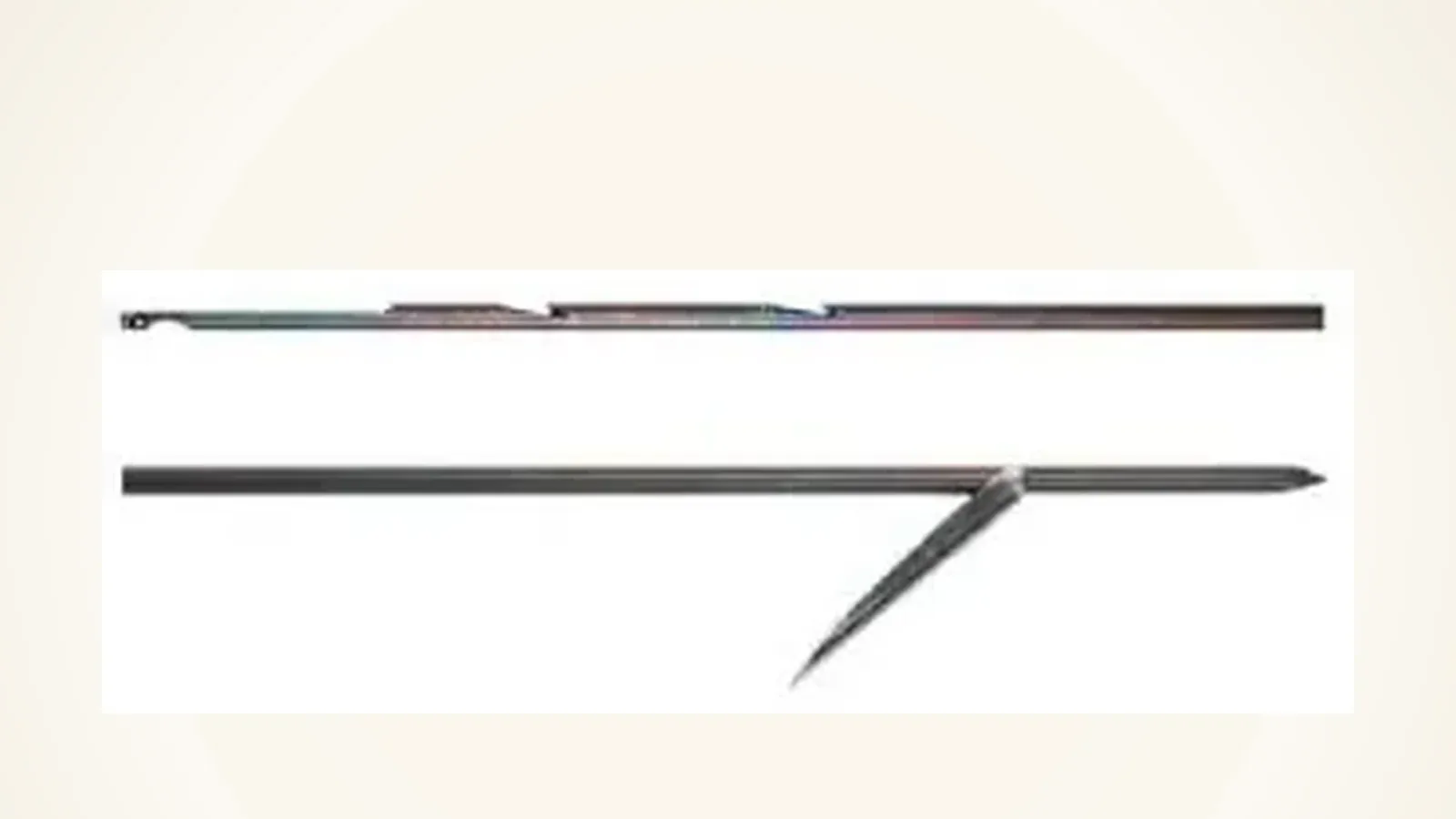
The stainless steel lie: why your spearfishing shaft bends at 100kg
A lot of spearfishing shafts on the market are marketed as “premium 316 stainless steel”. It sounds good. It is good — for some things. For spearfishing shafts, it is the wrong steel. Rob Allen’s own 2023 Stainless Steel vs Spring Steel Parts 1 and 2 puts the numbers on a load cell. The summary is brutal.
The test Rob ran
A Rob Allen plated spring-steel shaft and a 316 stainless shaft of the same 7.5 mm diameter, both clamped into a hydraulic tension rig, pulled until they bend permanently.
- 316 stainless: permanent bend at around 95 kg of pull. Max rated tensile strength in literature: roughly 1,500 to 1,600 MPa.
- Rob Allen plated spring-steel: held past 180 kg. Rated tensile strength: approximately 2,100 MPa.
The stainless shaft did not snap — it just bent. Permanently. Which on a spearfishing shaft is the same thing as failing, because a bent shaft misses the next fish.
Why this matters in Thailand specifically
Two scenarios where Thai spearos bend shafts on a regular basis:
Reef impact shots. You miss a grouper holding in a crevice, your spear hits hard coral or limestone at full velocity. The impact load can spike well past 100 kg for a fraction of a second. A stainless shaft takes a permanent bend. A spring-steel shaft flexes, absorbs, and springs back straight.
Big GT and dogtooth tuna shots. Landing a 15 kg GT that is running toward structure pulls hundreds of kilograms of peak load through the shaft as it angles through the fish and hits bone or resists the pull. Stainless will bend. Spring steel will hold.
Both of these are standard Thai scenarios. Any serious spearo here will eat through a set of stainless shafts in a season. Rob Allen plated spring-steel lasts longer because it is engineered for exactly this.
What “plated spring steel” actually is
Plating matters as much as the base steel. Stainless steel is corrosion-resistant by composition — chromium in the alloy. Spring steel is not. It rusts fast without protection. Rob Allen’s solution is a hard chrome-plated spring-steel shaft. The spring-steel core gives you the yield strength, the chrome plating seals it from saltwater.
The tradeoff: if the plating gets scratched through — scraped over sharp rock repeatedly, or stored wet in contact with other metal — the underlying steel will rust at that point. Which is why storage matters. See storing rubbers and shafts in tropical humidity for the Thai storage protocol.
Why stainless is still used by some brands
Stainless is cheaper to produce and does not need plating. For a budget-brand speargun at a dive-shop rack, stainless is the default. It is “good enough” for someone who will miss a few shots on reef and take the bent-shaft tax as the cost of learning.
If you are past that stage and you want to stop replacing shafts after every rock hit, spring steel is the answer. It is what I sell because it is what works. There is no other reason.
How to tell what shaft you have right now
- Rob Allen-branded shafts from an authorised distributor: plated spring-steel by default across the full range. Matte grey finish, slight chrome sheen.
- Generic “premium stainless” or unlabeled shafts off Lazada, Shopee, or Facebook marketplace: almost always 316 or 304 stainless. Brighter silver finish, more mirror-like.
- If you’re not sure: WhatsApp me a photo. I can usually tell in five seconds.
The 30-second field test
After any shot that hit rock or a fish with bone, Rob’s rule: roll-test the shaft.
Put the shaft on a flat hard surface. Boat deck, glass table, polished floor. Roll it slowly. If it wobbles at any point in the rotation, it is bent and needs replacing. A plated spring-steel Rob Allen shaft from a clean shot will roll smooth every time — that is actually a design goal, not a coincidence.
If you want the full protocol, Rob walks through it in How To — Shaft Straightness.
The cost math
A Rob Allen 7.5 mm plated spring-steel shaft in Thailand runs roughly 1,100-1,500 THB depending on length. A generic stainless shaft online runs 600-900 THB. You save maybe 500 THB on the purchase.
If you bend the stainless shaft within a season (you will), and replace it, you’ve spent more than the spring-steel would have cost. Bent shafts also bend next to other perfectly good gear in the rod tube and can damage the guns. And the lost fish and the wasted trip are not priced in.
The spring-steel is the cheaper shaft over any realistic time horizon. Stainless is only the cheaper option if you only ever shoot soft water fish and never miss.
Bottom line
If you are buying shafts in Thailand and the seller cannot tell you the steel grade, assume it is stainless and assume it will bend the first time you touch rock. If the seller says “plated spring steel” and can point you at a brand with a Limited Lifetime distributor warranty behind it — Rob Allen being the one I can vouch for — that is the one worth buying.
If you want to see Rob’s own test footage, it is on the official channel. If you want shafts in stock in Thailand, the rubbers and shafts category has the full range, sized to every Rob Allen gun I sell.
Frequently asked
Are Rob Allen shafts stainless or spring steel?
Rob Allen ships plated spring-steel shafts (also marketed as Hi-Carbon). Spring steel is a different alloy than stainless and holds load past 180 kg of pull without permanent bend. Most other brands ship 316 stainless, which bends under 100 kg.
Will a stainless shaft rust?
Less than spring steel if neglected, but both need freshwater rinsing after every dive. Spring steel corrodes if you leave salt on it. The trade-off is worth it because stainless's lower tensile strength means it bends before it rusts.
How do I tell what shaft type I have?
A strong magnet is the quick field test. Stainless (316 or 304) is only weakly magnetic or non-magnetic. Plated spring steel is strongly magnetic. If the shaft visibly bends when you flex it in your hands, it is likely 316 stainless.
How often should I replace my shaft?
When it bends, not before. A straight shaft shoots straight. A bent shaft is inaccurate and a safety risk under load. Spring-steel shafts typically last years of regular diving. Stainless often needs replacement after the first significant fish.
Is a 7 mm or 7.5 mm shaft better?
7 mm is faster (lighter, less water resistance) and pairs well with single-band 14 mm rubber setups for reef work. 7.5 mm holds larger fish more reliably and pairs with dual-band 14 mm or single 16 mm for medium game. For a first gun in Thailand, 7 mm is enough.
Published 23 February 2026 · Diego Pauel · Gear
shaftsrob allenspring steelgear science
Keep reading
You might also like.
Gear
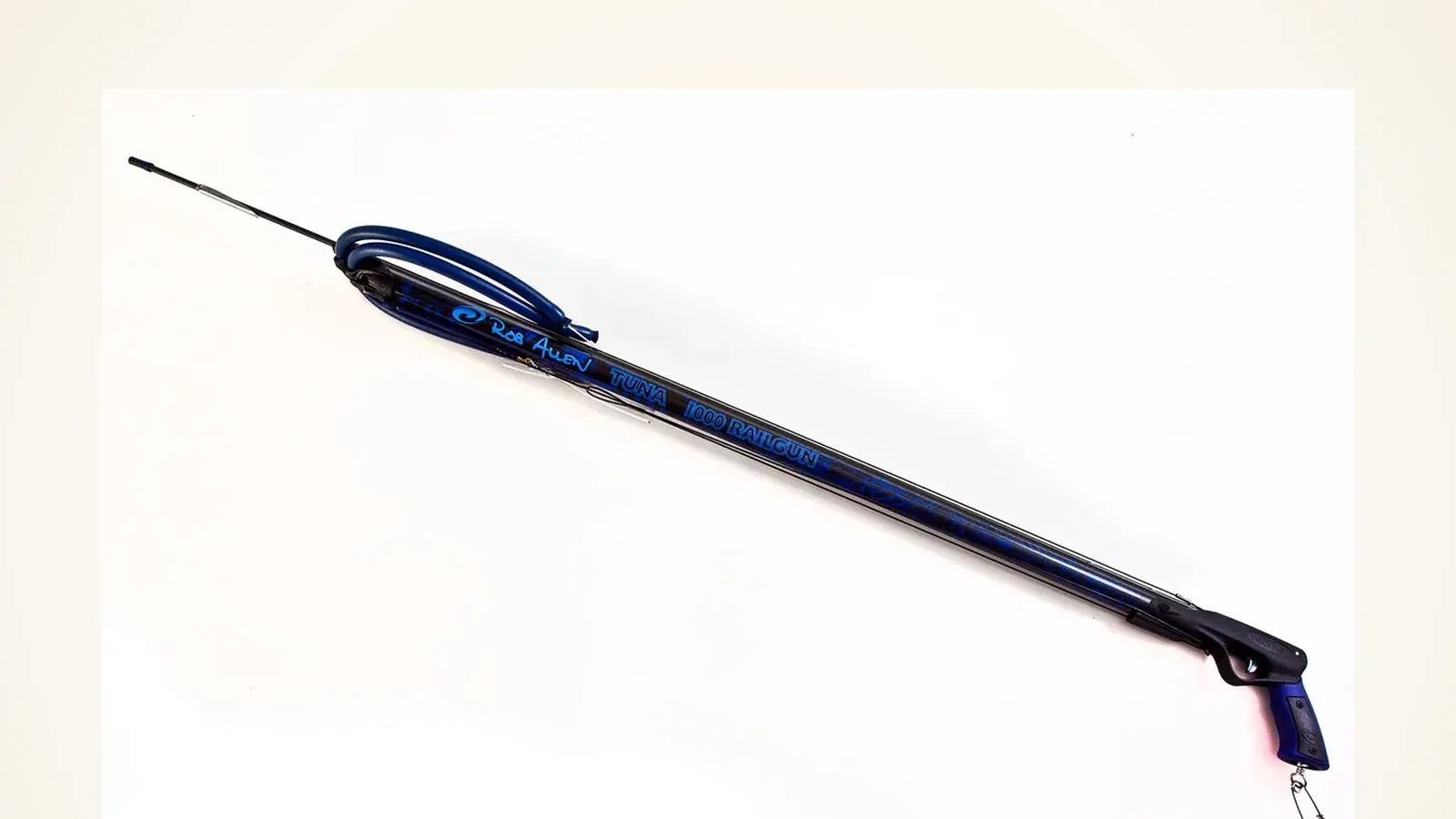
Snapper vs Tuna rail: which Rob Allen speargun for Thai reefs?
Snapper vs Tuna rail compared for Thai conditions. Honest picks by use case, real THB pricing, and when each gun is actu…
Gear
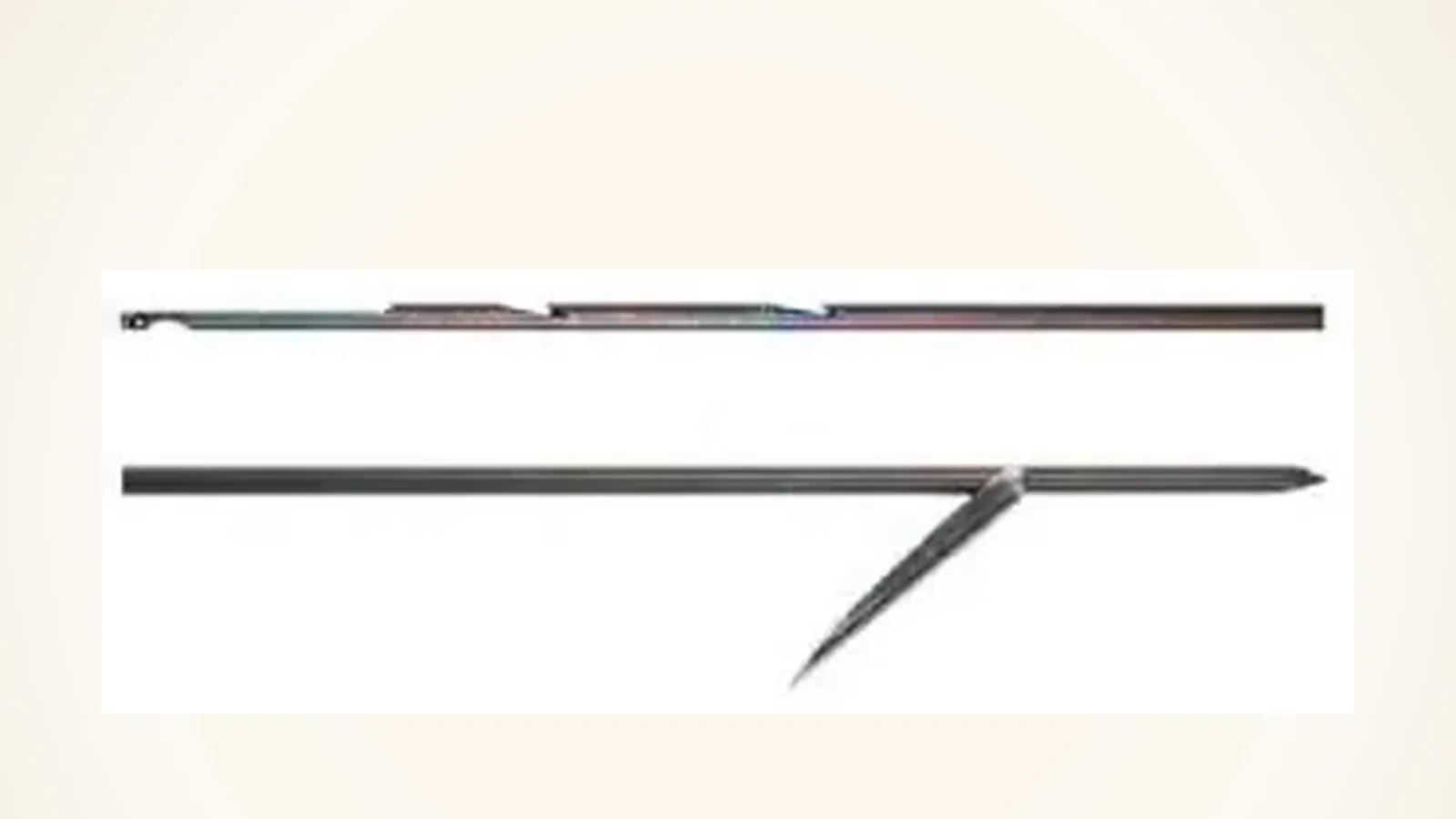
Squared barbs: 15% faster, 30% stronger — Rob Allen's 2025 update
Rob Allen's new squared-barb design gives 15% more spear velocity and tests stronger than radiused barbs. Thai reef + bl…
Gear
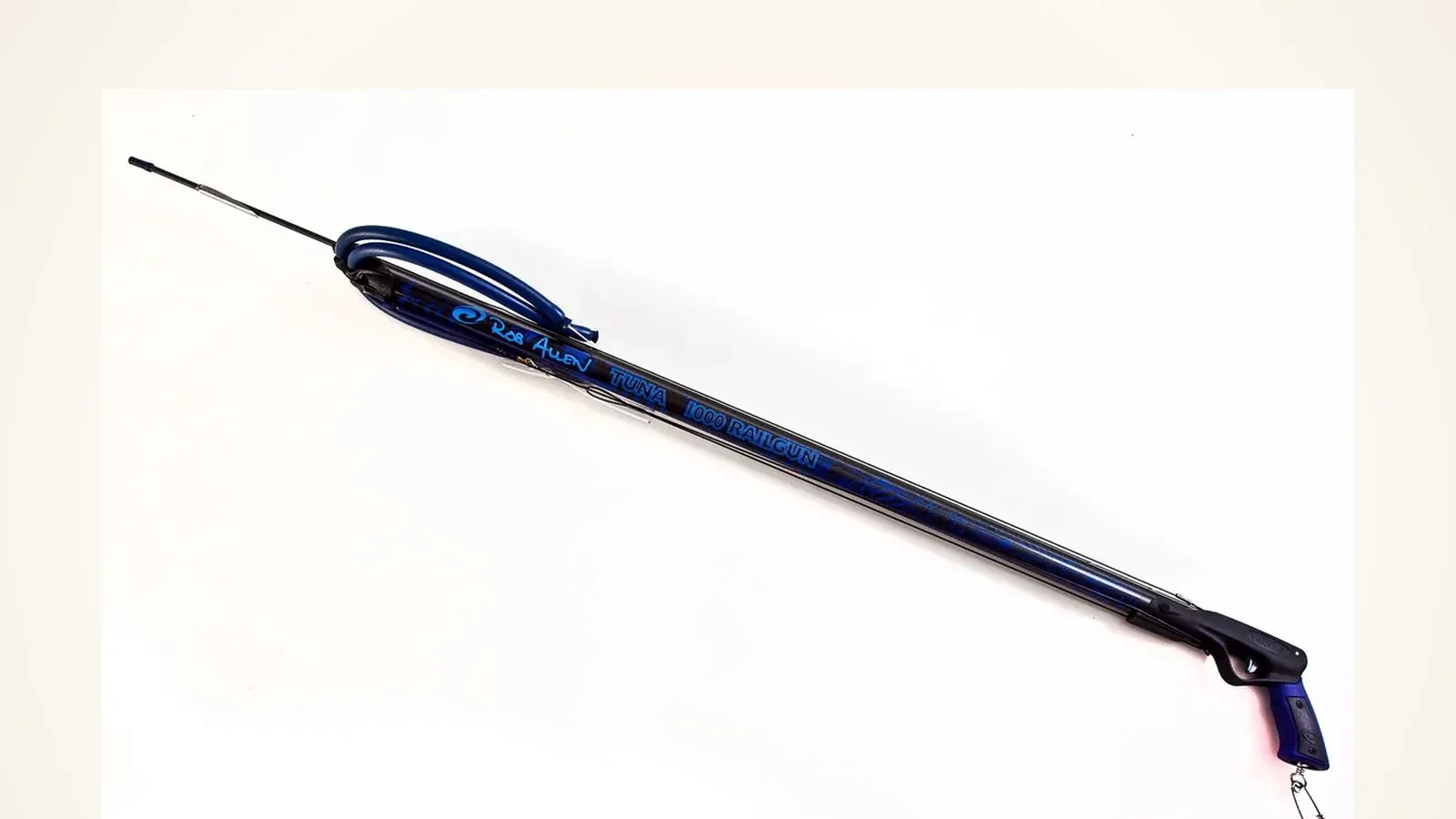
Triple-band or double-band? Rob Allen's Transkei test, Thai translation
Rob Allen's 2024-25 triple band development. When the extra rubber is worth the loading effort for Thai bluewater target…